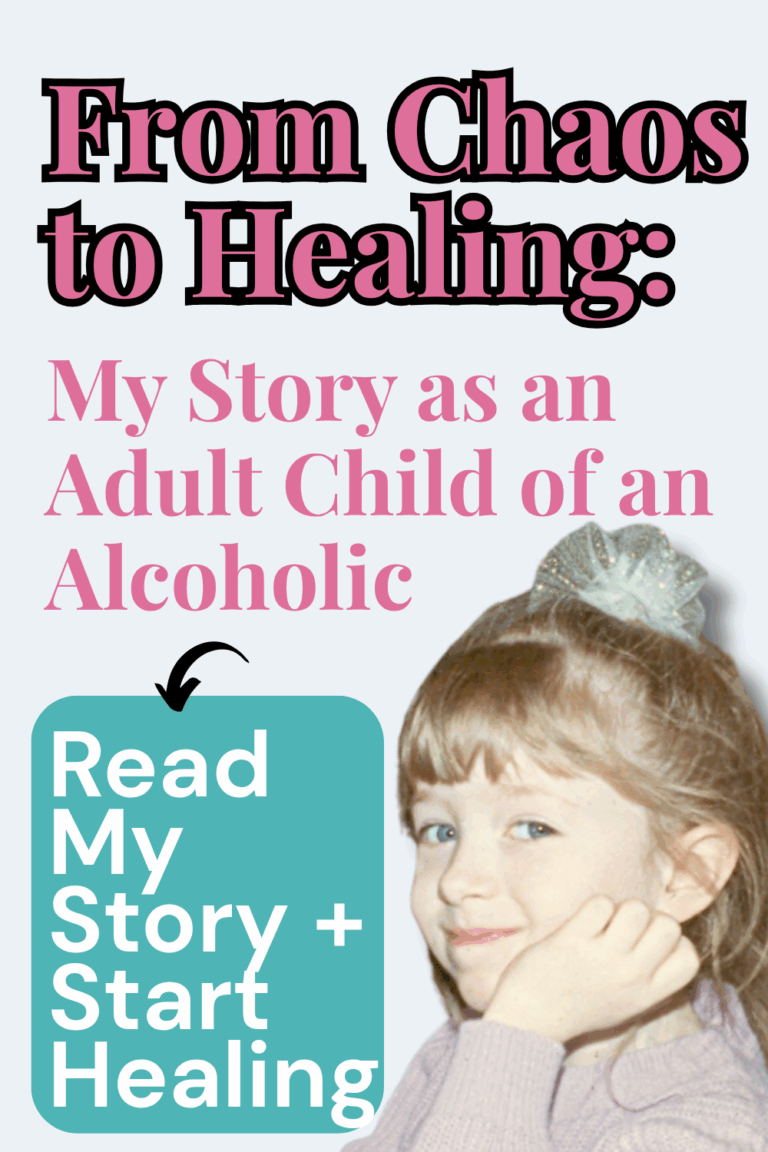
How Facing My Painful Past Helped Me Heal After Growing Up with an Alcoholic Parent
For many years, I believed healing meant moving on.
Don’t look back. Don’t dwell. Don’t stir things up.
But if you grew up with an alcoholic parent, you already know the truth:
what we don’t face doesn’t disappear — it quietly runs our lives.
Facing my painful past didn’t reopen old wounds the way I feared.
It gave me language, clarity, and compassion for the parts of me that had been surviving for decades.
If you’re an adult who grew up with an alcoholic parent and you’re wondering whether looking back will help or hurt, this is for you.
Watch the Related Video
If you prefer to watch or listen instead of read, I share this story in more depth in the video below including what finally helped me stop minimizing my past and start healing with compassion.
👉 Watch the full video here:
In this video, I talk about how growing up with an alcoholic parent shaped my nervous system, my relationships, and my sense of responsibility and how understanding my past became the foundation for real healing.
Growing Up with an Alcoholic Parent Shapes More Than Childhood
When you grow up in a home affected by alcoholism, you adapt early.
You learn to:
- Read moods before words are spoken
- Stay quiet to keep the peace
- Take responsibility for things that were never yours
- Be “strong” even when you feel scared, lonely, or unseen
Many adult children of alcoholics don’t realize these patterns started as survival skills.
They helped us get through childhood.
But survival skills don’t always serve us well in adulthood.
Instead, they can show up as:
- Chronic anxiety or hypervigilance
- Difficulty trusting others
- Over-functioning or people-pleasing
- Feeling responsible for everyone else’s emotions
- A deep sense of shame we can’t quite explain
For a long time, I thought these were personality flaws.
They weren’t.
They were learned responses to an unpredictable environment.
Why I Avoided Looking at My Past for So Long
Like many adult children of alcoholics, I minimized my experience.
“My parent wasn’t that bad.”
“Others had it worse.”
“It’s in the past — why dig it up?”
I worried that revisiting old memories would:
- Make me bitter
- Keep me stuck
- Turn me into someone who blamed instead of healed
What I didn’t understand then is this:
unacknowledged pain doesn’t go away — it shows up sideways.
It shows up in our relationships, our self-talk, our boundaries, and our nervous systems.
Facing the Past Isn’t About Blame — It’s About Understanding
When I finally allowed myself to look honestly at my childhood, something unexpected happened.
I didn’t feel hatred.
I felt relief.
Relief that my reactions made sense.
Relief that I wasn’t broken.
Relief that there was a reason I struggled in certain ways.
Facing my past helped me:
- Separate who I truly am from who I became to survive
- Understand why certain situations felt overwhelming
- Release shame I didn’t even realize I was carrying
Healing wasn’t about reliving every painful moment.
It was about naming the truth with compassion.
How Facing My Past Helped Me Heal
Here’s what changed when I stopped avoiding my story and started understanding it:
1. I Stopped Taking Responsibility for Everyone Else
I learned that I was allowed to have needs, limits, and emotions without managing how others felt about them.
2. My Anxiety Finally Made Sense
Hypervigilance wasn’t a flaw.
It was a nervous system shaped by unpredictability.
Understanding that allowed me to work with my body instead of against it.
3. I Learned the Difference Between Guilt and Responsibility
Growing up with an alcoholic parent often blurs that line.
Facing my past helped me reclaim what was — and wasn’t — mine to carry.
4. I Developed Compassion for Myself
Not excuses.
Not denial.
Compassion.
And compassion creates space for real change.
Healing Means Integrating
One of the biggest myths about healing is that looking back keeps you stuck.
In reality, what we integrate loses its power over us.
Facing your past doesn’t mean:
- You live there
- You define yourself by it
- You stay angry forever
It means your past no longer controls your present.
If You Grew Up with an Alcoholic Parent, This Is an Invitation — Not a Demand
You don’t have to rush.
You don’t have to uncover everything at once.
And you don’t have to do it perfectly.
Healing begins with curiosity, not pressure.
Gentle questions like:
- What did I need back then that I didn’t get?
- How did I learn to survive?
- What patterns might make sense now?
That’s where real healing often starts.
You’re Not Weak for Wanting to Heal — You’re Brave
If you’ve spent years being “the strong one,” it can feel unsettling to slow down and look inward.
But facing your past isn’t a sign of weakness.
It’s an act of self-respect.
And healing doesn’t erase your story — it helps you live beyond it.
Take a Gentle First Step Toward Healing
If this resonated with you, I created a free guide to help adult children of alcoholics begin healing without overwhelm or pressure.
👉 Get the free Steps to Healing Guide
You don’t have to do this alone and you don’t have to do it all at once.
Rooting for you!