
5 Daily Self-Care Habits That Actually Heal Your Past (for Adult Children of Alcoholics)
Why Typical “Self-Care” Doesn’t Heal the Deeper Wounds
If you’ve tried self-care before and it didn’t seem to change anything, you’re not alone.
For those of us who grew up with an alcoholic parent or in another kind of chaotic home, surface-level self-care—like bubble baths or face masks—can feel nice, but they don’t touch the root causes of pain.
I’m Jody Lamb, author, speaker, and someone who grew up with an alcoholic mom. I help adult children of alcoholics learn how to heal and create lives they truly love.
In this article, I’ll share five daily self-care habits that go deeper—habits that retrain your nervous system, calm your inner chaos, and help you heal the past for good.
🎥 Watch the video version of this post below to hear me talk through each habit and how I use them in my own life:
Subscribe to my channel for new videos every week: YouTube.com/JodyLamb
Why Is Self-Care So Hard for Adult Children of Alcoholics?
When you grow up in dysfunction, your brain learns to scan for danger, not peace.
Even years later, that hypervigilance can show up as anxiety, people-pleasing, or a constant sense that something’s wrong.
True self-care is a way to retrain your nervous system to feel safe again.
Key Insight: Gentle, consistent habits are what tell your body, “It’s okay now. You’re safe.”
1. Morning Grounding Practice: Start Safe, Stay Calm
Most people start their day by reaching for their phone. Instant stress.
But when you grew up in unpredictability, mornings are your best opportunity to reprogram calm.
Try this:
- Sit quietly for two minutes with your hand over your heart.
- Take slow breaths and say, “Right here, right now, I’m safe.”
- Notice three things you can see, hear, and feel.
It sounds simple, but this tiny habit signals safety to your nervous system.
You’ll start your day centered instead of reactive.
2. Journaling for Self-Connection
Journaling isn’t about grammar or pretty pages; it’s about giving your inner child a voice.
Try prompts like:
- What am I feeling right now?
- What do I need today?
- What’s one thing I want to let go of?
Write freely, without judgment. Some days it’s a few words, other days it’s a letter to your younger self.
You’ll begin noticing patterns—like triggers or unmet needs—and start showing up for yourself in healthier ways.
Key Insight: Journaling is how you rebuild a safe, trusting relationship with yourself.
3. Move Your Body with Intention
Our emotions live not just in our minds but also in our bodies.
That’s why intentional movement helps you release what’s been stored for years.
It doesn’t have to be complicated:
- Take a 10-minute walk
- Stretch or do gentle yoga
- Dance to your favorite song
When you move with awareness, you’re reminding your body: I’m safe now.
Movement helps you reconnect with yourself and clears emotional fog.
4. Daily Boundary Check-In
If you grew up in dysfunction, you might’ve learned that saying “no” is selfish.
But boundaries are actually a form of love—for yourself and others.
Each day, ask yourself:
- Where am I saying yes when I want to say no?
- How can I protect my energy today?
Maybe that means not answering a stressful text right away, or saying no to extra work when you’re at capacity.
Every boundary you honor tells your inner child: You’re protected now.
Key Insight: Boundaries aren’t walls; they’re gates that let love and peace in—and chaos out.
5. End-of-Day Compassion Ritual
End your day with gentleness instead of scrolling on your phone until you’re numb.
Before bed, try this:
- Write down three small wins from the day
- Thank yourself for something you did well
- Place your hand on your heart and say, “I’m proud of you for getting through today.”
It may feel awkward at first but with time, it becomes deeply comforting.
This small ritual reprograms the belief that you’re “never enough.”
🌿 Healing Takes Consistency, Not Perfection
These habits may seem small, but when practiced regularly, they create massive internal shifts.
They’re how you teach your brain and body that peace is possible again.
You don’t need to do them perfectly; you just need to keep showing up.
Because every small act of care is a declaration: I’m healing.
Keep Healing with Free Support
If this resonated with you, I created a free resource to help you take your next step. Download my free guide on healing from growing up with an alcoholic parent. You’ll discover what’s really happening as you heal and how to move forward with clarity and hope.
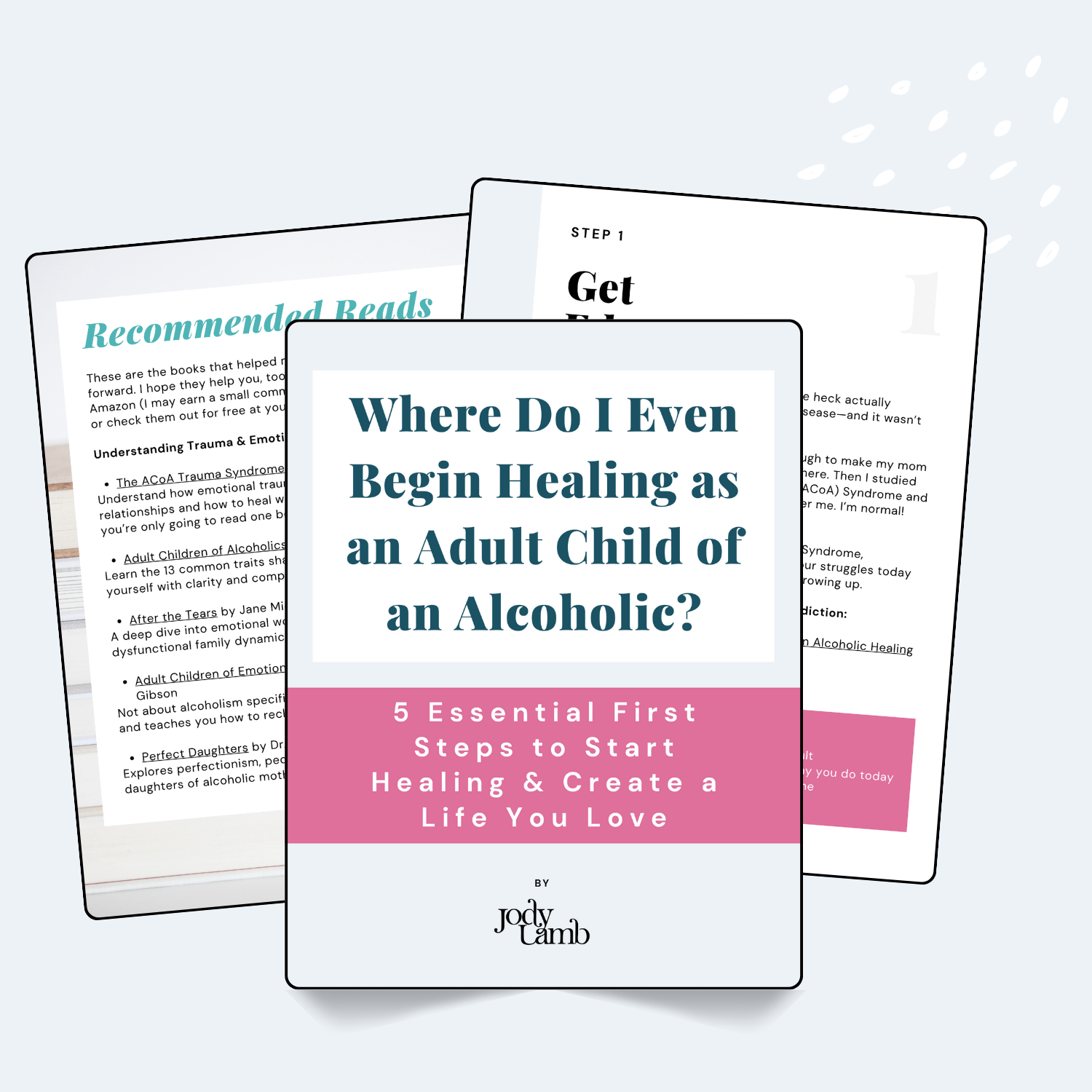
Take charge of your healing and create a life you truly love with the 5 Essential First Steps to Start Healing & Create a Life You Love guide. Take charge of your healing with The 5 Essential First Steps to Start Healing & Create a Life You Love. This free guide helps you understand where to begin, release shame, and take clear steps toward the peaceful, joyful life you deserve.
Frequently Asked Questions About Healing Self-Care
1. What are examples of self-care that actually help you heal your past?
True healing self-care focuses on calming your nervous system and rebuilding self-trust. Examples include grounding each morning, journaling your emotions, moving your body with intention, checking in with your boundaries, and ending your day with compassion. These habits help you feel safe and connected to yourself again.
2. Why is self-care so hard for adult children of alcoholics?
When you grow up in chaos or emotional neglect, your brain learns to stay alert for danger. Even years later, it can feel uncomfortable to slow down or rest. That’s why real self-care for adult children of alcoholics starts with gentleness, consistency, and learning that peace is safe.
3. What is trauma-informed self-care?
Trauma-informed self-care means choosing daily habits that honor your past experiences and support healing, rather than pushing or shaming yourself. It’s about listening to your body, setting boundaries, and practicing compassion as you rebuild your sense of safety and self-worth.
About the Author
Jody Lamb is an author and speaker who helps adult children of alcoholics heal from childhood dysfunction, set healthy boundaries, and build peaceful, joyful lives. She’s the author of Easter Ann Peters’ Operation Cool and shares weekly healing guidance on YouTube.com/JodyLamb and JodyLamb.com.