Why Does Life Feel Harder Than It Should?
Life feels harder than it should because you’re carrying weight that was never yours to carry. If you grew up as the responsible one — the caretaker, perhaps loving a parent with addiction — you learned to manage everyone else’s chaos long before you learned to tend to your own needs, and that load doesn’t disappear when you become an adult. You’re running the same race as everyone else, just with a backpack full of rocks.
I’m Jody Lamb, author and memoirist, and I felt exactly this way for most of my adult life. I grew up coping with my mother’s alcoholism, and for years I assumed everyone around me had simply been handed an easier version of life than I had.
I go deeper on this in this video.
Why does life feel harder when you grew up around addiction?
When you grow up around alcoholism or any ongoing dysfunction, you land in grown-up land with a very heavy backpack and that backpack is full of rocks. Each rock is something you absorbed as a kid: the hypervigilance, the sense that everything is your responsibility, the belief that your job is to keep everyone else okay.
Those rocks are why the ordinary stuff feels so heavy. Relationships — romantic, friendships, the ones at work — feel harder than they seem to for other people. So does feeling satisfied with yourself, trusting that you’re worth something, believing you’re even allowed to want more. These aren’t character flaws. They’re the predictable, well-documented challenges that children of alcoholics carry into adulthood.
You landed in adulthood with a very heavy backpack full of rocks you didn’t pack. Feeling the weight of it means you’ve been carrying something real.
For a long time, I didn’t even know the backpack was there. I just knew I was tired in a way my coworkers didn’t seem to be.
Why do I feel responsible for everyone but myself?
Because that was the role. If you were the responsible one, you got rewarded — quietly, constantly — for reading the room, smoothing things over, and putting your own needs last. That wiring runs deep.
In my twenties, my sense of responsibility for my family — for everyone except my own wellbeing — was so strong that I genuinely couldn’t imagine life feeling any other way. It felt like a life sentence. This was just what life was, and it was going to feel like this forever.
If you take one thing from my story, let it be this: it was never your job to carry all of that weight, and no amount of carrying it will fix the person you’re carrying it for.
If this is landing for you, the blueprint I made walks you through exactly how I started putting rocks down. It’s linked below.
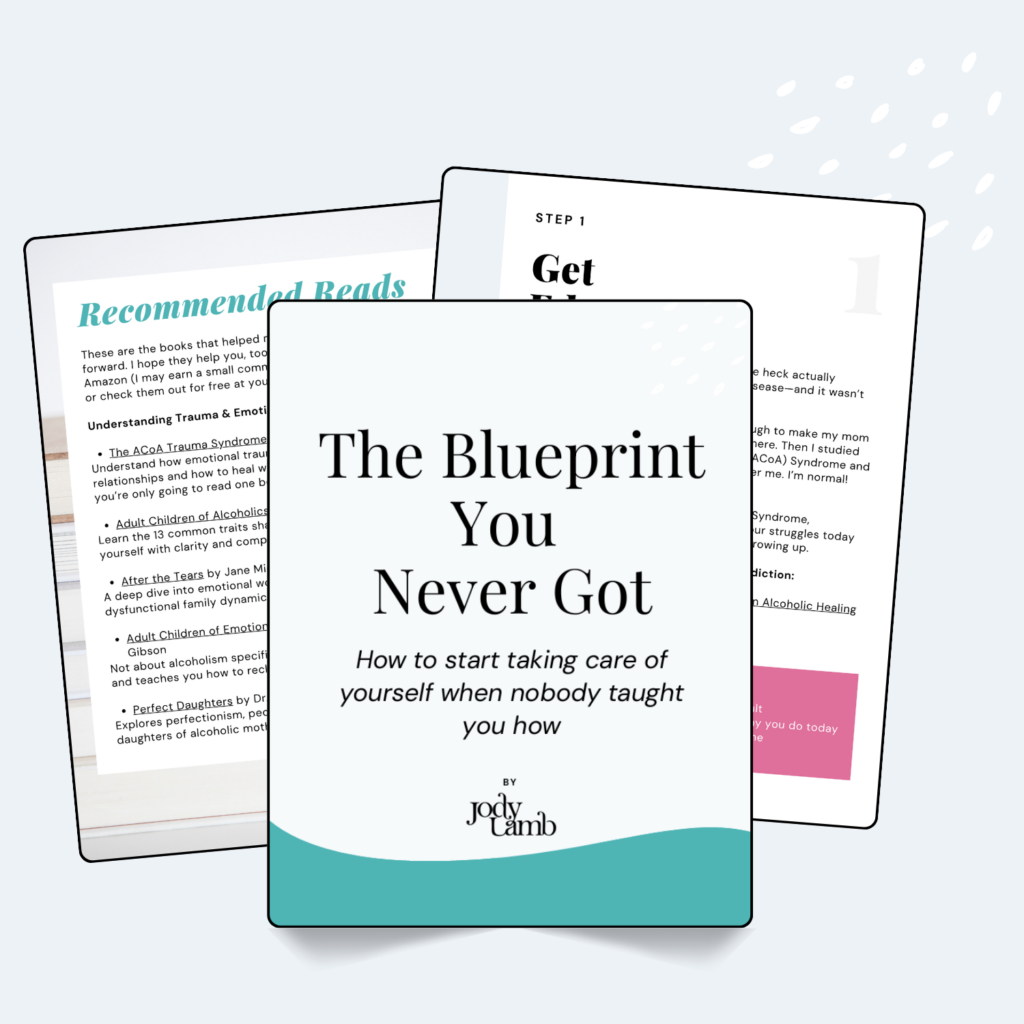
You spent years taking care of everyone else. The Blueprint You Never Got is the free guide to finally taking care of you — the thing nobody ever taught you how to do.
Can life actually feel easier, or is this just who I am?
It can feel easier. I’m living proof, and so are millions of others who grew up this way.
The turning point for me came at 26. I looked around at the few friends I’d managed to keep and at my coworkers, and I could see they were experiencing life differently — lighter. That recognition pushed me toward therapy, support-group meetings, and something I’d never once prioritized: taking care of myself. And when I started pulling a few rocks out of the backpack, I could actually feel the difference. That small taste of “easier” is what kept me going.
Life doesn’t have to feel this hard. But no one takes the rocks out for you; that part is yours.
What finally changed for me?
One shift changed everything: I accepted that my primary job in life is to take good care of myself — not other people.
That sounds simple. It was the hardest thing I’ve ever learned. It meant admitting I couldn’t fix my mother — I couldn’t, no matter how much weight I carried — and that trying to was quietly costing me my own life. It wasn’t my job to fix her. It was, and still is, my job to take good care of me.
It was never my job to carry that weight. It wasn’t my job to fix my mother; I couldn’t. But it is my job to take good care of me.
I’m 43 now, and my life looks nothing like the one I braced for in my twenties. My relationships are healthier. My work feels meaningful. My outlook is steadier and far more hopeful. It’s not perfect — the challenges are still there, and I’m still on this journey — but the difference isn’t small. It’s the difference between dragging yourself through a marathon and actually running it.
How do I start taking a rock out of the backpack today?
You don’t unpack the whole thing at once. You reach for one rock.
On the days life feels harder than it should, ask yourself one question: what’s one small thing I can do today to take better care of me? Some days that’s a boundary. Some days it’s rest, or a therapy appointment, or ten minutes with someone who fills you back up. (For me, honestly, some days it’s just sitting quietly with my cat, Chessie.) The more you point your attention at your own healing instead of everyone else’s chaos, the lighter the load gets.
Remember the thesis I want you to steal: your primary job in life is to take good care of yourself — not other people. Live from that, and life slowly stops feeling like a sentence.
If you’re ready to put the backpack down, I made you something. The Blueprint You Never Got is a free guide that walks you through recognizing how your childhood shaped you — and the first small steps to feeling different. It’s the thing I wish someone had handed me at 26. Grab it below.
You spent years taking care of everyone else. The Blueprint You Never Got is the free guide to finally taking care of you — the thing nobody ever taught you how to do.
Frequently Asked Questions
Why does life feel so much harder for children of alcoholics? Because you carry the effects of that childhood into adulthood — hypervigilance, over-responsibility, low self-worth, and difficulty in relationships. These are common, documented challenges, not personal failures, and they make everyday life feel heavier than it actually is.
Is it selfish to focus on myself instead of my struggling family member? No. You cannot fix another person’s addiction, no matter how much you sacrifice for them. Taking care of yourself isn’t abandoning them; it’s the one job that’s genuinely yours, and it’s what makes a healthier life possible for you.
Can life actually feel easier, or am I stuck like this? It can truly get easier. Through therapy, support groups, and consistent self-care, I went from feeling like life was a life sentence to a life at 43 that’s better than I ever imagined. Healing is real, and it’s available to you, too.