

Putting Yourself First Isn’t Selfish. I’ll Prove It.
Someone in your life has probably called you selfish for taking care of yourself. Maybe you’ve called yourself that. They were wrong and so were you. Putting yourself first is not selfish; it is literally your job. You cannot sustainably love, support, or show up for anyone while running on empty, and your needs matter on their own anyway, not because of what they let you give to everyone else. If that sentence feels wrong right now, that’s not a sign it’s untrue. It’s a sign of what you were raised to believe.
I’m Jody Lamb, author, and I learned this the hard way. I spent years trying to save my mom from her alcoholism, rearranging my whole life around keeping her okay — and the thing I most needed to hear is the thing nobody ever said to me.
I go deeper on this in the video.
Where does the “selfish” label even come from?
A lot of us grew up in homes where our job was to manage other people’s feelings, hold things together, and fix what was broken. We got really, really good at it. And somewhere along the way, we internalized an idea that shaped everything after: my worth comes from being useful to other people. Taking care of myself? That’s selfish. That’s what people do when they don’t care about anyone else.
But who gave you that job description?
Because I’ve looked, and nobody ever handed me a document that said my primary role in life was to manage everyone else’s needs before my own. I just absorbed it — from a house where that’s what survival required. And I’d bet you absorbed yours the same way.
Nobody ever handed you that job description. You absorbed it from a house that needed you to carry it — and you’ve been working that job ever since.
Why isn’t putting yourself first selfish?
Here’s what I know now, after years of learning it the hard way: your primary job in life is to take good care of yourself. Not other people. Yourself.
I know that feels wrong. It might even sound a little selfish as you read it — that’s the point. Everything you were raised to believe is pushing back against that sentence.
So think about it this way. When you’re on a plane and the oxygen mask drops, the flight attendant doesn’t say make sure everyone else has air before you do. They say put yours on first. Not because you don’t care about the people beside you — but because you can’t help anyone if you’re unconscious.
The same is true in your life. You cannot sustainably love, support, or show up for the people around you if you’re running on empty. Putting yourself first isn’t abandoning them. It’s the thing that makes you capable of being there for them at all.
And more than that: your needs, your joy, your life — they matter on their own. Not because of what they allow you to give to everyone else. They matter because you matter.
Putting yourself first isn’t abandoning anyone. It’s what makes you capable of being there for them at all.
If part of you has always suspected you were handed the wrong job description, I made something for exactly this — link below.
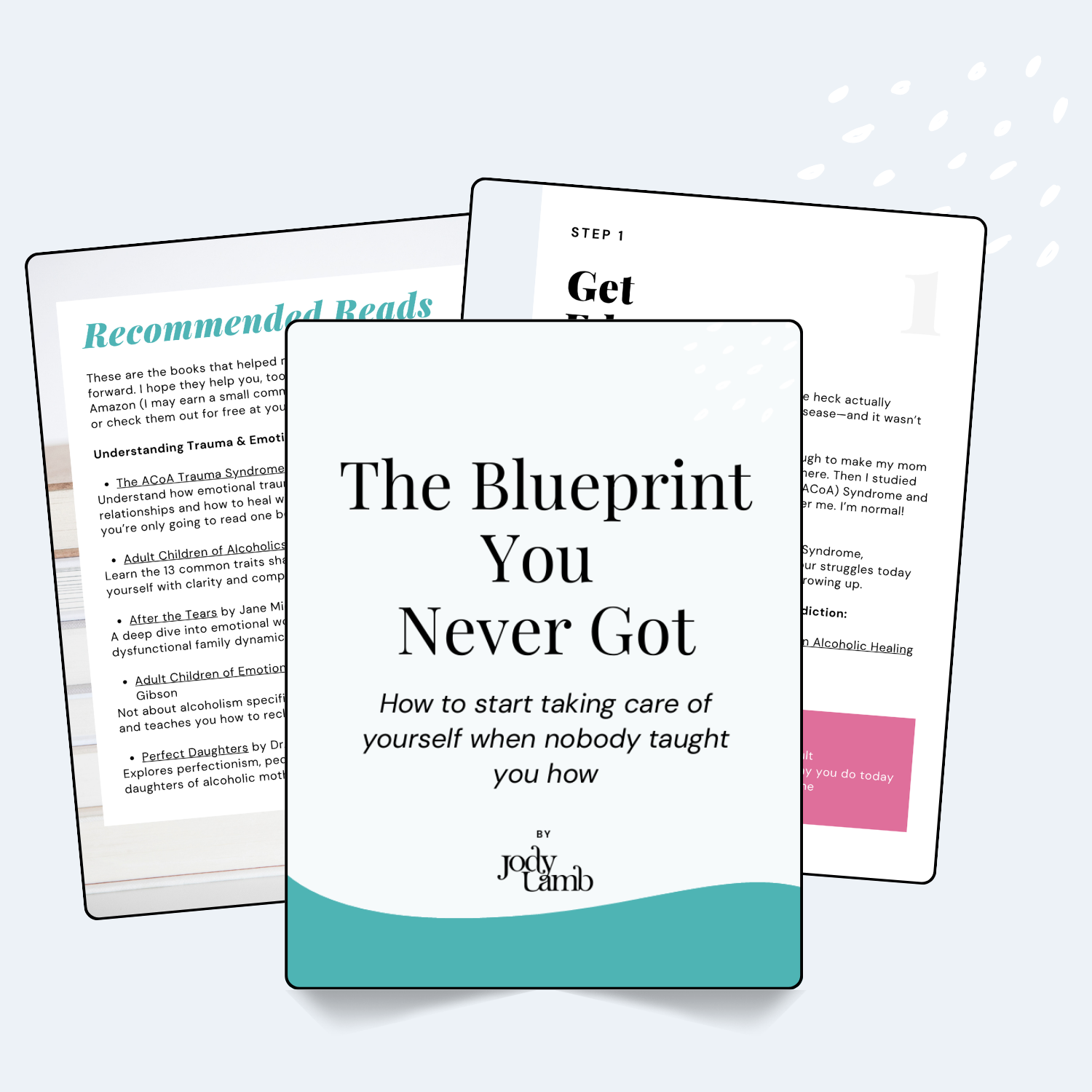
You spent years taking care of everyone else. The Blueprint You Never Got is the free guide to finally taking care of you — the thing nobody ever taught you how to do.
But why does taking care of myself feel so wrong?
Because nobody gave you the blueprint. That’s the whole reason.
If you’ve spent your entire life putting everyone else first, it’s not because something is wrong with you. It’s because nobody ever sat you down and said: here’s how to take care of yourself. Here’s how to rest without guilt. Here’s how to figure out what you even enjoy. Here’s how to put yourself first without feeling like a terrible person.
Most of us who grew up taking care of everyone around us became incredibly capable adults. We can handle anything. We’re the person everyone calls in a crisis. And we have absolutely no idea how to sit still, or rest, or ask for what we need.
That’s not a character flaw. It’s a missing piece of information — and missing information can be learned.
I’m still learning it. It’s not too late for either of us.
What convinced me — the proof from my own life
I spent years trying to save my mom from her alcoholism. I rearranged my life around keeping her okay, and for a long time I genuinely believed that if I just tried harder, loved her enough, held things together well enough, I could fix it.
What I learned — slowly, painfully — is that you cannot love someone into sobriety. And you cannot caretake your way into a good life.
The moment I started taking care of myself wasn’t a betrayal of her. It was the only thing I should have been doing all along. My job was never to save my mother. My job was to take care of me.
That sentence — your primary job is to take care of yourself — felt like permission and heresy at the same time. Maybe it feels that way to you right now. That’s okay. That’s exactly how it’s supposed to feel when you’re finally being handed the right job description after decades of working the wrong one.
So where do I start?
You start by accepting the job. Not perfectly, not all at once — just by letting the idea in that your wellbeing is your actual assignment, and then doing one small thing that reflects it today. Rest without earning it. Say the thing you need. Do something purely because you enjoy it. Let someone help you.
The fact that you’re great at surviving means you already have what it takes to learn how to actually live. You just need the blueprint.
So I made you one. The Blueprint You Never Got is a free guide for people who’ve spent their whole life taking care of everyone else and are ready to start taking care of themselves. It’s the thing I wish someone had handed me twenty years ago. Grab it below — and the next time someone calls you selfish for it, you’ll know exactly what to think.
You spent years taking care of everyone else. The Blueprint You Never Got is the free guide to finally taking care of you — the thing nobody ever taught you how to do.
Frequently Asked Questions
Is it selfish to put yourself first? No. Selfishness means disregarding others; taking care of yourself means making sure you’re well enough to live your own life and show up for the people in it. If putting yourself first feels selfish, that’s usually a sign you were raised to believe your worth came from being useful — not a sign you’re doing something wrong.
Why do I feel guilty when I take care of myself? Because you likely learned early that your value came from managing other people’s needs, so prioritizing your own trips an old alarm. That guilt is inherited programming, not evidence of wrongdoing. It tends to fade as you repeatedly choose your own wellbeing and see that nothing bad happens — and that the people who love you are fine.
How can putting myself first make me better for other people? The same way the oxygen mask works on a plane: you can’t help anyone if you’re unconscious. Running on empty makes you resentful, exhausted, and less present. When your own needs are met, you have something real to give — and you’re able to show up consistently instead of collapsing.