How Common Is It to Grow Up With an Alcoholic Parent?
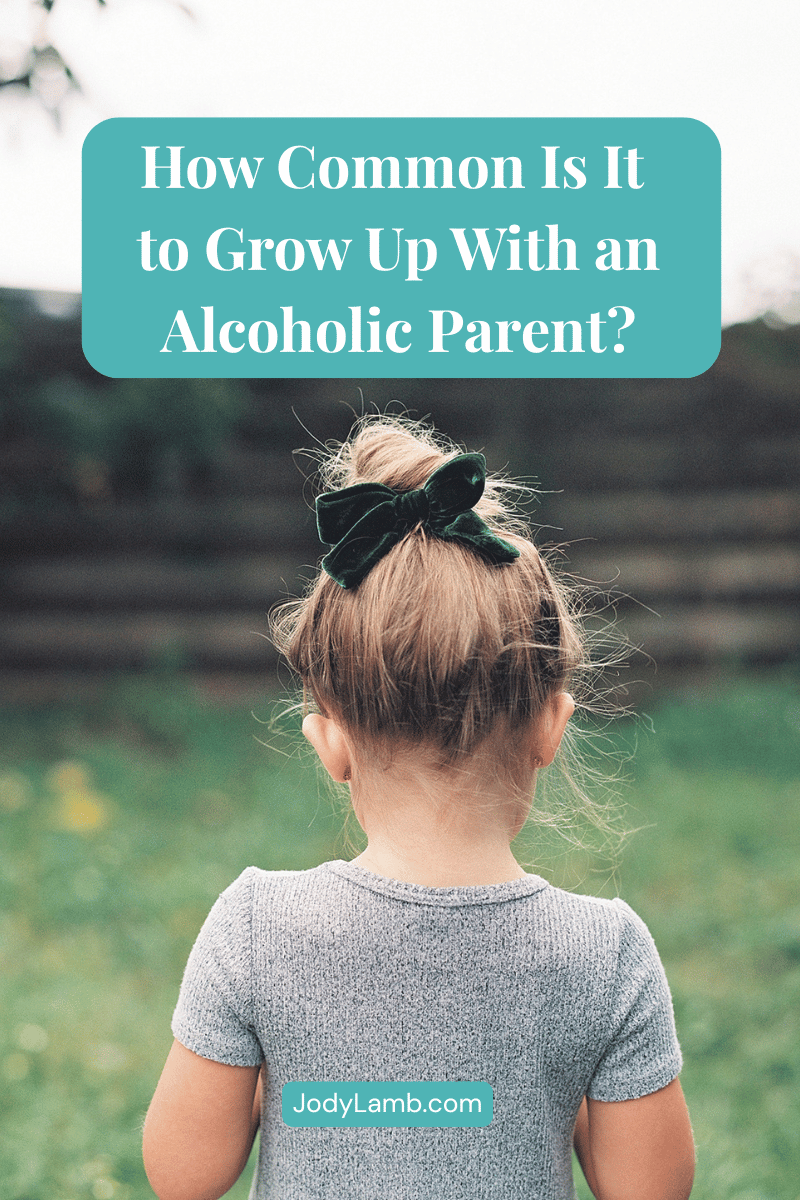
It is far more common than almost anyone realizes: roughly 1 in 4 kids in the United States has at least one parent who abuses alcohol. That’s a quarter of every classroom, every sports team, every neighborhood, every checkout line at the grocery store. If you grew up this way and spent your whole childhood convinced your family was the only one — that this was your secret to keep and your shame to carry — the numbers tell a different story. You were never as alone as you were made to feel. Not even close.
I’m Jody Lamb, author and memoirist, and I know that feeling of alone from the inside. I grew up with an alcoholic mother, and as a kid I worked so hard to keep it secret, certain we were the only family like this. It never occurred to me that a quarter of the kids in my class might be going through something similar, or worse. I only learned the truth decades later — and it changed everything about how I carried it.
I go deeper on this in this video.
How common is it, really?
Here are the latest United States numbers, from the sources I’ve been tracking for nearly twenty years (all linked in the video description so you can see them yourself):
- 48.4 million Americans ages 12 and older — that’s 16.8% — had a substance use disorder in the past year, according to the 2024 National Survey on Drug Use and Health (SAMHSA).
- 27.9 million people 12 and older had an alcohol use disorder specifically in the past year. That’s about 1 in 10 Americans — alcohol is the most common substance use disorder there is.
- About 1 in 4 kids in the U.S. currently lives with at least one parent who abuses alcohol. That single statistic has barely moved in the two decades I’ve watched it.
- A 2023 study in JAMA Pediatrics, University of Michigan researchers estimated that 19 million children under 18 live with a parent or other adult who has a substance use disorder — another confirmation of that roughly one-in-four figure.
And remember: these are just the United States. The global picture is its own, larger story.
One in four. A quarter of every classroom, every team, every neighborhood. You were never as alone as you were made to feel.
What is a substance use disorder, exactly?
Quick note: I’m not a clinician, just someone who’s lived this and cares deeply about awareness — so here’s my plain-language version. A substance use disorder is a complicated medical condition where someone keeps using a substance because of how good it makes them feel, until the use spins out of their control and starts seriously harming their life. They don’t stop, because the substance has taken hold — and over time, heavy use actually changes how the brain works, which is why the medical community treats addiction as a brain disorder.
It’s often called a family disease, and for good reason: it doesn’t only affect the person struggling. It deeply affects everyone who loves them — sometimes even more than the person themselves. And it has no prejudice. It affects every kind of person, every race, gender, income level, and background.
Addiction has no prejudice. It takes the best people — the favorite uncle, the sweet mom, the funny, kind, wonderful ones.
If any of this is landing and you want a place to start taking care of yourself, I made a free guide for exactly that — link below.
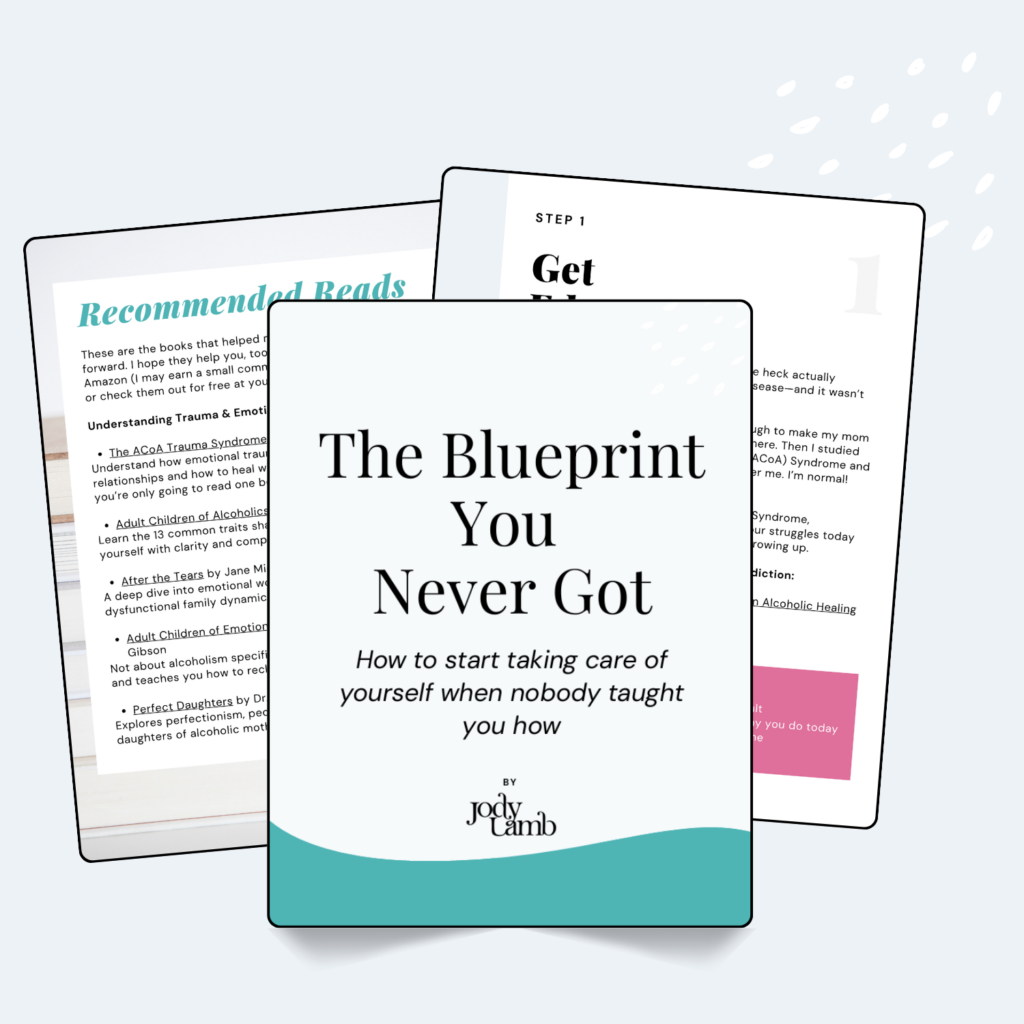
You spent years taking care of everyone else. The Blueprint You Never Got is the free guide to finally taking care of you — the thing nobody ever taught you how to do.
If it’s this common, why does it feel like a secret?
This is the part that still makes me angry. Because for something that touches a quarter of all kids, we are astonishingly bad at talking about it.
When I started my healing journey, I discovered how common this was — and it broke something open in me, because my whole childhood I’d believed these problems were unique to my family. I kept the secret on purpose. I didn’t want anyone to know about my mom’s drinking, because I thought it was our problem and something to be deeply ashamed of. I had no idea that kids in my class, kids in my neighborhood, were living the same thing.
Years ago, I wrote a novel for tweens — Easter Ann Peters’ Operation Cool — loosely based on my own experience growing up with my mom’s alcoholism, because I wanted kids that age to know they weren’t alone. When I brought it into the publishing world, I was stunned by the feedback: the topic was “too sensitive,” “too niche,” not mainstream enough.
They called a book about one in four kids “too niche.” That’s not niche. That’s a quarter of the children in the room, told to keep quiet.
After the book was published (by a small press that believed in it), I used my own PTO to speak in schools — and some teachers asked me not to mention the parental-alcoholism piece, to stick to “more relatable” topics like bullying and friendship instead. I obliged, but it broke my heart, because millions of kids are sitting in those classrooms feeling completely alone.
Why does knowing how common it is actually help?
Because the shame was never yours to carry — and secrecy is what kept it alive. When you learn that one in four kids is living some version of what you lived, the story in your head starts to change. You weren’t uniquely broken. Your family wasn’t uniquely cursed. You were one of millions of kids in an incredibly common situation that nobody had the courage to name out loud.
That’s why I care so much about awareness. Every time one more person says this out loud, it chips away at the shame and makes it a little less likely that the next kid grows up believing they’re the only one. This connects to the thing I come back to in everything I make: your primary job in life is to take good care of yourself — not to protect everyone else by swallowing a secret that was never yours to hold. Releasing the shame is part of that job.
This is a huge part of what my memoir, My Job Is Me, is about — my family’s story, the statistics, and everything it took to stop carrying shame that belonged to a disease, not to me. The Blueprint You Never Got is a free guide with the first steps I used to learn how to take good care of myself when I didn’t get the blueprint. Grab it below — and know that whatever you lived through, you were part of a quarter of kids who lived it too. You are not alone. You never were.
You spent years taking care of everyone else. The Blueprint You Never Got is the free guide to finally taking care of you — the thing nobody ever taught you how to do.
Frequently Asked Questions
How many children grow up with an alcoholic parent? About 1 in 4 children in the United States lives with at least one parent who abuses alcohol — a figure that’s stayed remarkably steady for two decades. A 2023 study in JAMA Pediatrics estimated that roughly 19 million U.S. children under 18 live with a parent or other adult who has a substance use disorder, which lines up with that same one-in-four estimate.
Is it normal to feel ashamed that a parent struggled with addiction? Yes, it’s extremely common — but the shame was never actually yours to carry. It grows out of secrecy and stigma, not out of anything you did. Addiction is a medical condition, a brain disorder that affects every kind of family. Learning how common it is often loosens that shame, because it replaces “we were the only ones” with the truth: you were one of millions.
Why does no one talk about growing up with an alcoholic parent if it’s so common? Because stigma and fear keep it hidden. Even though it affects roughly a quarter of kids, it still gets labeled “too sensitive” or “too niche” to discuss openly — in publishing, in schools, in everyday conversation. That silence is exactly what leaves so many kids feeling alone. The more openly we talk about it, like any other family health issue, the less isolating it becomes.