What Actually Helps You Stop People-Pleasing?
What actually helps you stop people-pleasing is practice in moments small enough that the fear doesn’t hijack you. For me, four things moved the needle: I stopped waiting to fix the root cause and started practicing in tiny, low-stakes moments; I learned to sit in the discomfort instead of escaping it; I got honest that I was performing for an audience that wasn’t watching closely; and I started tracing the urge back to what I actually needed.
I’m Jody Lamb, author and memoirist, and I tried to stop people-pleasing for years. I read the books. I knew all the reasons. I understood exactly where it came from — and I still couldn’t stop. If you’ve ever felt like you know too much and have changed too little, this one’s for you.
I go deeper on this in this video.
Why doesn’t the usual advice work?
The advice is always some version of just say no, set boundaries, or you don’t owe anyone anything. And all of that is true. But for people like us, the problem was never that we didn’t know we were allowed to say no.
It’s that saying no feels dangerous in a way that’s hard to explain to someone who hasn’t lived it. It’s physical — the guilt, the dread, the bone-deep conviction that something terrible will happen if you disappoint someone. Knowing intellectually that you’re allowed doesn’t make any of that go away.
The problem was never that I didn’t know I could say no. It’s that saying no felt dangerous — and understanding it didn’t make that feeling budge.
So here’s what actually helped me, rather than what was supposed to.
1. I practiced in small moments instead of fixing the root cause first
There’s an idea out there that if you just heal enough, understand enough, trace it back far enough, the people-pleasing will stop on its own. That wasn’t my experience at all.
What helped was starting absurdly small. Not the big scary confrontations — the tiny ones. Saying “I actually don’t love that restaurant.” Not immediately apologizing when someone bumped into me.
Small moments are low-stakes enough that the fear doesn’t completely take over, which means you get to practice noticing the urge and not obeying it. That’s the muscle. And you build it in the moments that don’t really matter.
2. I learned to sit in the discomfort instead of escaping it
The reason people-pleasing is so hard to break isn’t stubbornness. It’s that the relief of making someone else comfortable is immediate — and the discomfort of not doing it just sits there, unresolved, with nothing to make it stop.
So I had to learn something simple and enormous: the discomfort of not people-pleasing wasn’t danger. It was just discomfort. And it passed. Every single time it passed, I had a little more proof that I could survive it.
The discomfort of not people-pleasing isn’t danger. It’s just discomfort — and every time it passes, you have proof you can survive it.
This sounds small. It wasn’t.
3. I got honest about who I was performing for
A lot of my people-pleasing was a performance for an audience that wasn’t watching nearly as closely as I thought. I was contorting myself to manage perceptions that people had already moved on from.
Getting honest about that didn’t make the urge vanish, but it created a little space — just enough to ask myself a genuinely useful question in the moment: is this actually necessary right now, or am I just scared?
If this is landing and you want somewhere to start, I made a free guide for exactly this — link below.
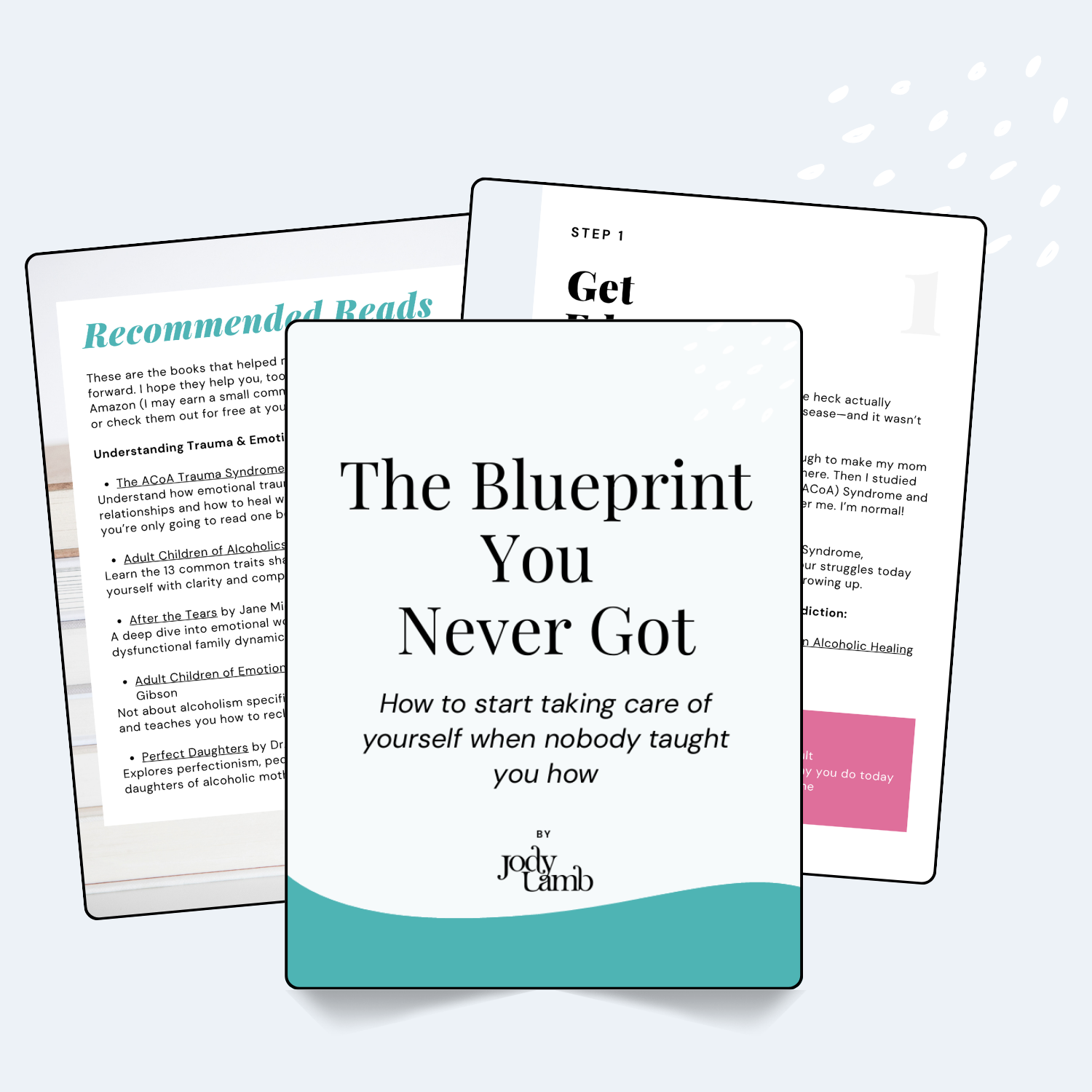
You spent years taking care of everyone else. The Blueprint You Never Got is the free guide to finally taking care of you — the thing nobody ever taught you how to do.
4. I started connecting the impulse back to what I actually needed
This one was the slowest and by far the most useful. When I felt the pull to over-explain, over-apologize, or shrink myself, I started asking: what do I actually need right now? What am I not saying?
Because people-pleasing is often a detour around the thing you actually want but don’t feel entitled to ask for. Getting good at spotting the detour is how I started finding the actual road.
And that’s where this connects to something bigger. I was never taught that my needs were worth asking about — I was taught to manage everyone else’s. So learning to people-please less turned out to be a very slow, very clunky way of learning that my primary job in life is to take good care of myself. Not everyone around me.
Is people-pleasing a personality flaw?
No. I don’t think people-pleasing is a character defect or a bad habit you simply need to break. I think it’s what happens when you grow up believing your job is to manage everyone else’s experience.
Which means the real work isn’t just learning to say no. It’s slowly, painstakingly learning that your job was always something else — that your needs matter, and that taking care of yourself isn’t a betrayal of the people you love. It’s the thing you were always supposed to be doing.
Taking care of yourself isn’t a betrayal of the people you love. It’s the thing you were always supposed to be doing.
What if I understand all this and still can’t change?
Then you’re exactly where I was for years, and I want to say this clearly: that gap between understanding something and actually shifting it is real, and it doesn’t mean you’re broken.
It means you’re human, and you’re working against something that was installed really early — before you had any say in it. It takes time. It takes practice in moments so small they feel like they don’t count. And it does get easier.
If this landed for you, The Blueprint You Never Got is a free guide I put together for people who’ve spent their whole lives taking care of everyone else and are ready to start taking care of themselves. It’s the thing I wish I’d had years ago when I was trying to figure all of this out. Grab it below — and this week, try one absurdly small no. That’s where it starts.
You spent years taking care of everyone else. The Blueprint You Never Got is the free guide to finally taking care of you — the thing nobody ever taught you how to do.
Frequently Asked Questions
Why is it so hard to stop people-pleasing even when I understand why I do it? Because insight and nervous-system response are two different things. If you learned early that disappointing someone was dangerous, saying no still triggers real physical dread — guilt, panic, the certainty something bad will follow — no matter how well you understand the origin. Change tends to come from repeated small practice, not from understanding it better.
How do I start saying no if it feels terrifying? Start absurdly small, in moments where the stakes are genuinely low: voicing a mild preference, not apologizing when something isn’t your fault, letting a small silence sit. Low-stakes moments keep the fear from hijacking you, so you can practice noticing the urge and not obeying it. That’s the muscle you’re building.