Why Can’t I Relax and Do Nothing?
You can’t relax and do nothing because staying alert once kept you safe. If you grew up reading the room, watching faces, and bracing for the next terrible thing, your brain learned a hard lesson: the moment you let your guard down, chaos started. So it built a program — stay busy, stay ready — and that program is still running. Sitting still doesn’t feel restful to you; it feels unfamiliar and strange, so your mind reaches for the to-do list to get comfortable again. That’s not your personality, and it’s not a flaw. It’s outdated programming, and it can be rewritten.
I’m Jody Lamb, author and memoirist, and learning to relax was one of the hardest parts of my healing journey — harder than almost anything else. I spent my life coping with the effects of my mom’s alcoholism, and I want to be transparent: I still slip back into the old ways sometimes.
I go deeper on this in this video.
Why do I get restless the moment I sit down?
Here’s what it looked like for me for years. I’d finish a stressful workday and tell myself I was going to watch TV, or go to a movie with a friend. A few minutes in, my brain would go straight to the list — the emails I hadn’t answered, the thing in my house that needed cleaning, everything I still had to accomplish. And that was it. I was out of relaxation mode entirely.
If I was home, that feeling would get me up “to take care of one little thing.” That one little thing led to another. Before long, an hour had passed since I’d abandoned my own plan to rest.
Looking back, I know why I was drawn to being hyper-busy: it felt safe. Sitting and doing nothing felt unfamiliar and strange and genuinely uncomfortable — and when something feels uncomfortable, of course you take steps to feel comfortable again. Being active, being busy, being ready, was what felt normal to me. When I was moving, I was in action. I was prepared for any terrible thing that might happen.
Your brain isn’t sabotaging your rest. It’s protecting you the only way it learned — by keeping you on alert.
Is there something wrong with me if I don’t enjoy rest?
No — but I remember believing there was. Every time I told myself I was going to relax and then failed, I felt broken. Flawed.
Because the people around me talked about rest completely differently. My coworkers looked forward to it. They talked about the Netflix shows they were going to binge, how much they loved vegging out on the couch all weekend. And I felt abnormal. What was wrong with me that I didn’t crave that — that I felt physically unable to do it?
Nothing was wrong with me. The truth is simpler: for years, maybe decades, whenever you let your guard down, something terrible followed. Your brain drew the obvious conclusion and made a rule — stay alert, stay on guard, because the minute you don’t, chaos starts. That rule kept you safe. It’s just fully outdated now.
If you grew up bracing for the next bad thing, “I can’t relax” isn’t a personality trait. It’s a survival rule that outlived the danger.
You have the opportunity to relax now. You’re permitted to. And it’s actually necessary, because peaceful moments are part of taking good care of yourself.
If this is landing and you want somewhere to start, I made a free guide for exactly this — link below.
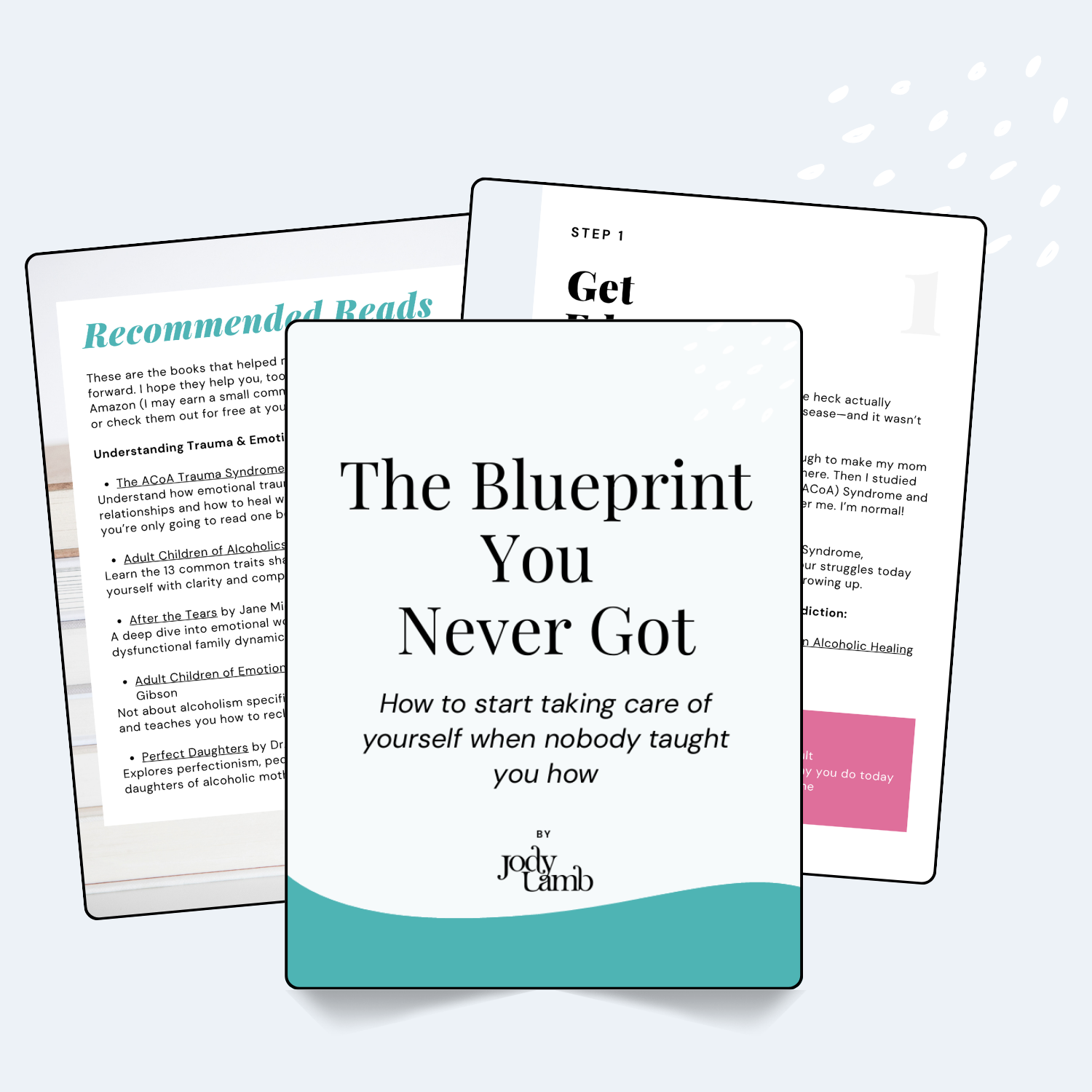
You spent years taking care of everyone else. The Blueprint You Never Got is the free guide to finally taking care of you — the thing nobody ever taught you how to do.
How did I actually learn to relax?
Three things genuinely helped me, and none of them involved forcing myself to enjoy a TV show.
- I stopped feeling guilty that I didn’t crave rest like everyone else. Instead of treating that as evidence something was wrong with me, I started seeing rest as a crucial part of my ability to take care of myself. That’s when the most important lesson landed: my only job in life is to take good care of myself — and rest is critical for my nervous system to recuperate and handle the ordinary stresses of life.
- I actually scheduled it. This might sound silly, but for those of us who are task- and schedule-driven, it works: I penciled in fifteen minutes a day for purely doing nothing. I’d sit on the couch in silence, or out on my back patio listening to the birds. I was being productive by not being productive. I learned to sit in the discomfort of not being busy — and the amazing part is that I started to look forward to that peace. Yours might look different; maybe it’s silence, or meditation, or something else entirely.
- I started naming the alarm. When the voice went off — you need to get up, you need to be productive — I’d remind myself: that’s my old programming resurfacing. My job now is to prioritize rest, because it’s critical to taking good care of myself.
I was being productive by not being productive. Fifteen minutes a day of nothing, on purpose, taught my body that stillness was survivable.
Does this ever stop being hard?
I’ll be honest: I don’t have this perfected, and I probably never will. That feeling still comes back, and it’s still hard to chase away.
It happened just yesterday. I sat down to watch a show with my husband, Andy — actual relaxation, actual quality time. And my brain went to a closet near the living room, where I’d noticed a couple of disorganized boxes of wrapping paper and ribbon earlier that day. It bothered me. So while I was sitting there trying to watch the show, I started thinking: I could just bring the boxes in here and get them organized while we watch. I could be productive.
And I had to say it plainly to myself: No, Jody. This is your dedicated relaxation time. This is quality time with Andy. It is not necessary to sort a box of wrapping paper right now.
That’s what the work looks like in practice. Not a permanent cure — just catching it, naming it, and choosing rest one more time.
What if I’m just not built for this?
You are. When you were a kid, you developed a brilliant, effective coping skill: stay alert, stay busy, stay ready for the next crisis, because crises actually came. That skill worked. But it’s old programming you no longer need.
And here’s the hopeful part: the same nervous system that learned hypervigilance is fully capable of being reprogrammed. It can learn to prioritize rest. It can turn that discomfort into comfort over time. Your primary job in life is to take good care of yourself — and rest isn’t a break from that job, it’s part of it.
You are very good at surviving. You can also learn to be very good at living.
If you want guidance on where to start, The Blueprint You Never Got is my free guide covering everything I did at the beginning of my healing journey, when I was learning to build a life I truly love. Grab it below — and then, if you can, take fifteen minutes today and do absolutely nothing. That counts as getting your job done.
You spent years taking care of everyone else. The Blueprint You Never Got is the free guide to finally taking care of you — the thing nobody ever taught you how to do.
Frequently Asked Questions
Why do I feel uncomfortable when I try to relax? Because if you grew up in an unpredictable home, your brain learned that letting your guard down was when bad things happened. Stillness feels unfamiliar, and unfamiliar registers as unsafe, so discomfort pushes you back into motion. It’s a learned survival response, not a personality trait — and it can be unlearned with repetition.
Why can’t I sit still without thinking of things I should be doing? Because staying busy is how your nervous system feels safe, so the to-do list is the fastest route back to comfort. Naming that in the moment — “this is my old programming” — helps interrupt it. So does scheduling short, deliberate rest, which trains your body to tolerate stillness a little at a time.
How long does it take to learn how to relax? There’s no set timeline, and it isn’t linear. Many people find that short daily practice — even fifteen minutes of deliberate nothing — gradually turns discomfort into something they look forward to. The old feeling can still resurface years later; progress means noticing it and choosing rest anyway, not never feeling it again.