Signs You’ve Built Your Life Around Someone’s Addiction
If you love someone with an addiction, five signs usually reveal that you’ve quietly built your entire life around them: your calendar bends around their crises, you know their drinking patterns better than they do, you feel personally responsible when they relapse, you’ve stopped making plans in case you need to drop everything, and you can’t remember the last time you thought about your own life. This is evidence you took on a job that was never yours. And the exhaustion you feel isn’t a sign to try harder. It’s your body telling you you’ve been working the wrong job for years.
I’m Jody Lamb, author and memoirist, and I did that for twenty years. My mom is an alcoholic, and I believed it was my responsibility not just to help her but to fix her — to love her hard enough, be useful enough, be there enough that she would finally stop.
I go deeper on this in the video.
Before the signs, one thing I want to say carefully, because some of you are in it right now: you’re not behind, and you’re not foolish for not seeing this yet. The reason it’s so hard to recognize is that it doesn’t feel like a job. It feels like love. It feels like loyalty, like the only decent thing a good person would do.
Sign 1: Your calendar bends around their crises
Not once or twice — as a way of life. You don’t book the trip, don’t take the job, don’t go to the dinner. You leave the wedding early, slip out of the meeting, drive across town at midnight. Because what if today is the day, and you weren’t there.
When was the last time you made a plan without a small voice running a risk assessment in the background? What if she calls. What if he ends up in the hospital. What if I’m two hours away.
I remember a friend inviting me away for three nights, and sitting on my bed looking at the dates with a knot in my stomach — not excitement, dread. Three nights felt like an enormous window in which my mom could die and I wouldn’t be there. As if my physical proximity to her body had ever once stopped her from drinking. It hadn’t. Not in twenty years.
That knot was the job. I had been on shift so long I didn’t remember what it felt like to be off.
Your calendar is one of the most honest documents you have. It tells you what you actually believe your life is for.
Sign 2: You know their drinking patterns better than they do
You know what time of day they start. Which days are worse. The difference between three drinks and five just from their voice on the phone. What they buy, where they hide it, which excuses mean a few and which mean a lot.
You’ve been studying them for years, like a job — because in your mind it was one. If you can predict it, you can prevent it. If you can prevent it, you can keep them alive.
When my mom called me, within three seconds I knew. I didn’t have to listen for slurring; I just knew, the way you know the weather when you walk outside. And I thought: when did my brain become a monitoring device for someone else’s body?
That skill is real. But it was built for a job you were never supposed to have — and it can be redirected. Imagine pointing that same fine-tuned attention at yourself for once.
Sign 3: You feel responsible when they relapse
Not sad or heartbroken — though you feel those too. I mean the gut-level conviction that something you did, or didn’t do, caused it. Maybe I didn’t call enough. Maybe I said the wrong thing at Thanksgiving. Maybe I shouldn’t have set that boundary.
You did not cause this. You cannot cause this. You are not powerful enough to cause this — and I mean that as a kindness.
In recovery circles, there’s a phrase called the three Cs: you didn’t cause it, you can’t control it, you can’t cure it. The first time I heard it, I got angry. Because if all three were true, what had I been doing for twenty years? The answer, which took me a long time to look at, is that I’d been carrying something that was never mine. It felt so heavy because it didn’t belong to me.
If you feel responsible for their relapse, you’re still operating under the original agreement — you’re the manager, they’re the project. And as long as that’s true, their entire arc becomes your scoreboard. That’s an unbearable way to live.
Letting them have their life back, including the hard parts, isn’t abandonment. It’s the most respectful thing you can do — and the only thing that frees you to have a life of your own.
If you’re seeing yourself here and don’t know where to start, I made a free guide for exactly this spot — link below.
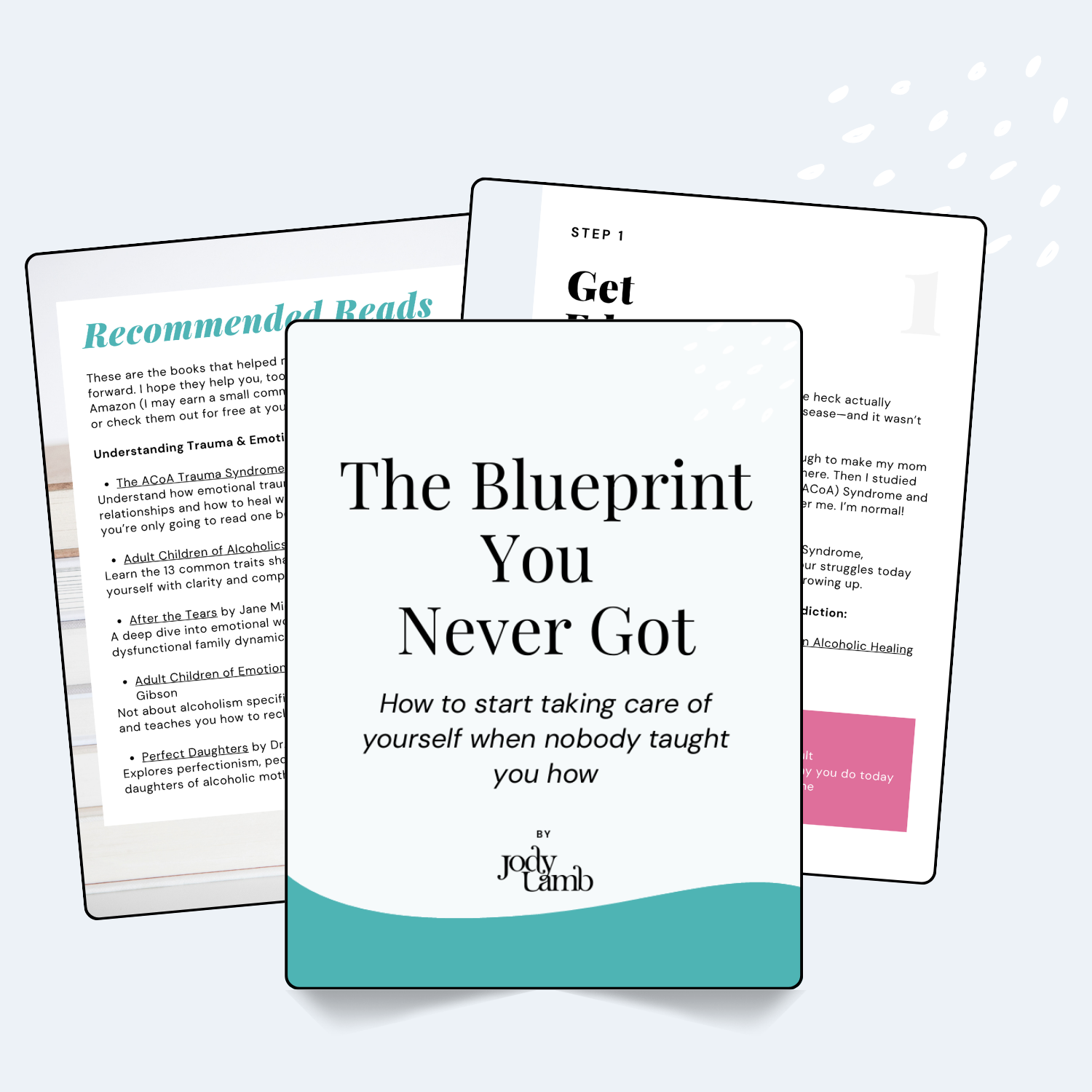
You spent years taking care of everyone else. The Blueprint You Never Got is the free guide to finally taking care of you — the thing nobody ever taught you how to do.
Sign 4: You’ve stopped making plans
From the outside this looks like flexibility. People might even compliment you on it — you’re so easygoing, so go-with-the-flow.
You and I both know that’s not what’s happening. You stopped letting yourself want things, because wanting them and then abandoning them hurt too much. So your brain helpfully turned down the volume on your desires so the next emergency wouldn’t break your heart.
This is a grief that doesn’t have a name: the grief of all the lives you didn’t get to live because you were on call. The friendships that thinned out from cancelling. The hobby you never picked back up. The trip. The relationship that ended partly because they figured out they’d always come second to a phone call. Each one is small. Add them up over years and you realize you’ve been living a half-life — and nobody’s giving those years back.
When I saw this clearly, I went through an angry stretch. Angry at her, but angrier at myself for letting it happen. If that’s where you are, that anger is allowed. It means you’re seeing the shape of what was taken from you, and that’s the beginning of getting it back.
Plans are how you tell your life you intend to be here for it. When you stop making them, you’re quietly opting out of your own future.
Sign 5: You can’t remember the last time you thought about your own life
Not their life. Not the family. Yours. What you want it to look like. Who you want to be in five years. Whether you’re happy — whether you’d even know what happy feels like for you, specifically.
If you tried to answer that just now and got quiet — like there’s static where the answer should be — I’m telling you this because I’ve been there, and it’s a place you can come back from.
Mine happened in a parking lot. A friend asked, in passing, what I wanted my next year to look like, and I couldn’t answer. Not because I had too many ideas — because I had none. The space where that answer should have lived had been used up by someone else’s chaos for so long that I had no relationship with my own future.
I had been so busy trying to keep her alive that I had forgotten to be alive.
So what is my job, if it isn’t saving them?
Your primary job in life is to take good care of yourself — not other people. That’s it. That’s the job you were actually given, and it’s the one you’ve been ignoring while you worked overtime at someone else’s.
You are not failing at saving them. You are succeeding at a job you were never supposed to have. There’s a difference, and it matters. The way out isn’t giving up on them — it’s giving the job back. Letting their life be theirs, and picking up the small, daily, surprisingly hard work of taking care of yourself.
The Blueprint You Never Got is my free guide for people who’ve been so busy taking care of everyone else that they have no idea how to start taking care of themselves. It’s what I wish someone had handed me ten years before I figured any of this out. Grab it below.
And if this helped even a little, send it to the person you’re thinking of right now — the sister, the friend, the one who texts you at midnight. They don’t need a lecture. They need someone to tell them their job isn’t what they think it is.
If you’re struggling under the weight of loving someone with an addiction, you don’t have to carry it alone. A therapist or a support community like Al-Anon can help. See these resources.
Frequently Asked Questions
How do I know if I’m too involved in a loved one’s addiction? Common signs include organizing your schedule around their crises, tracking their use closely enough to predict it, feeling personally responsible when they relapse, avoiding plans in case you’re needed, and losing touch with your own goals and wants. If several of those sound familiar, you’ve likely taken on responsibility for their addiction — something no one can actually carry for another person.
What are the three Cs of addiction? It’s a phrase used in recovery circles for loved ones: you didn’t cause it, you can’t control it, and you can’t cure it. It’s meant as relief rather than dismissal — a reminder that another person’s addiction was never within your power to create or fix, so their relapse isn’t a verdict on how well you loved them.
Does letting go mean abandoning someone with an addiction? No. Letting go means allowing them responsibility for their own life, including the hard parts, instead of managing it for them. You can love someone and stay connected while no longer treating their recovery as your job. For most people it’s what finally makes their own life possible again — and it’s often the more respectful stance toward the person they love.